Key Takeaways
In this article, you will learn:
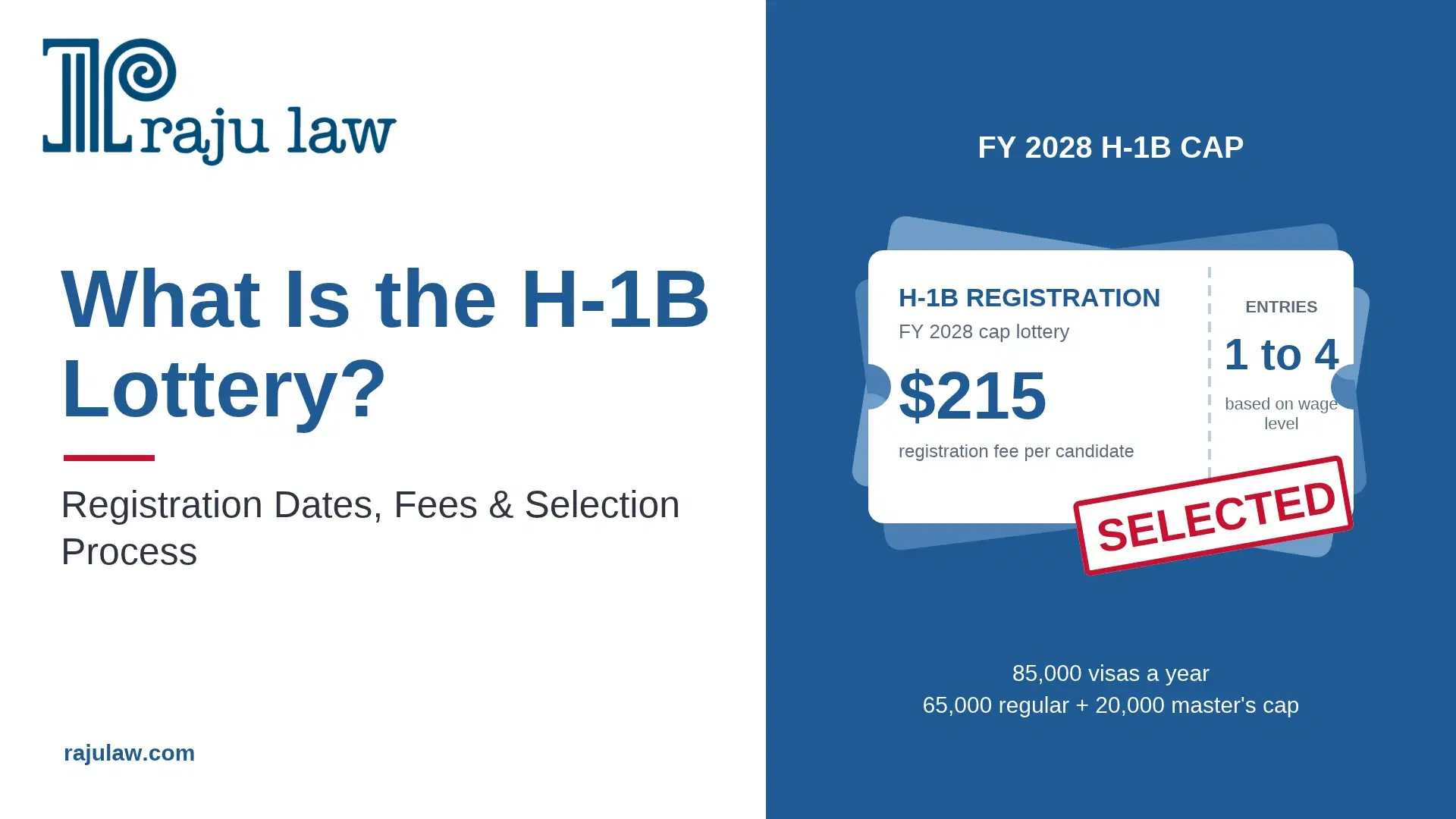
What the H-1B lottery is and how the 85,000-visa H-1B cap works
When H-1B registration opens for the FY 2028 season
Every H-1B fee an employer pays, from the $215 registration to petition costs
Where the $100,000 fee and the proposed $103,265 fee stand today
How the new wage-weighted lottery decides who gets selected
The latest H-1B selection rate and what affects your odds
What to do if your registration is not selected
What Is the H-1B Lottery?
The H-1B visa lets U.S. employers hire foreign professionals in specialty occupations — jobs that normally require at least a bachelor's degree in a related field. Because demand far exceeds the number of visas Congress allows each year, USCIS uses an electronic registration and selection process, commonly called the H-1B lottery.
Employers do not file a full petition first. Instead, they submit a short online registration for each candidate. Only candidates selected in the lottery can move forward to a full H-1B petition. For a complete overview of eligibility and the wider visa process, see our H-1B visa lawyer services page.
The Annual H-1B Cap
The H-1B cap is set at 85,000 new visas per fiscal year:
65,000 under the regular cap
20,000 under the advanced degree exemption (the "master's cap") for people with a U.S. master's degree or higher
The fiscal year runs from October 1 to September 30. That is why the registration held in March 2027 is for the FY 2028 cap, with jobs starting on or after October 1, 2027.
Who Is Exempt From the Lottery?
Not every H-1B case goes through the lottery. Common cap-exempt situations include:
Employment at universities and their affiliated nonprofit organizations
Nonprofit and government research organizations
Workers already counted against the cap who are extending, transferring, or changing employers
H-1B Registration Dates
FY 2028 Expected Timeline (Registration in 2027)
USCIS usually announces registration dates in late January or early February. For the last cycle, dates were announced about five weeks before the window opened.
Step | FY 2027 (completed) | FY 2028 (expected) |
Registration window | March 4 – March 19, 2026 | Early-to-mid March 2027 |
Selection notices | By March 31, 2026 | By late March 2027 |
Petition filing window | April 1 – June 30, 2026 | April 1 – about June 30, 2027 |
Earliest employment start | October 1, 2026 | October 1, 2027 |
FY 2028 dates are estimates based on past cycles. Confirm on the USCIS H-1B Electronic Registration Process page once announced.
What Happened in FY 2027
The FY 2027 season was the first under the new weighted system. USCIS received about 211,600 eligible registrations, a drop of roughly 38.5% from 343,981 the year before. USCIS reached the cap and confirmed there would be no second lottery for FY 2027.
H-1B Selection Rate: What Are Your Odds?
USCIS has not yet released the FY 2027 H-1B selection rate or a breakdown by wage level. For comparison, FY 2026 had 343,981 eligible registrations and an overall selection rate of about 35%.
FY 2027 saw far fewer registrations (about 211,600) competing for the same 85,000-visa H-1B cap. Fewer registrations generally improve overall odds, but under the weighted system a Level IV candidate now has four times as many entries as a Level I candidate. Your personal chances depend heavily on the wage level of the job offer.
H-1B Fees: What Employers Pay
The employer pays nearly all H-1B costs. Fees below are current as of November 2026 — always check the USCIS fee schedule before filing.
Registration Fee
$215 per beneficiary, paid when the registration is submitted in March. It is non-refundable, even if the candidate is not selected.
Petition Filing Fees (After Selection)
Fee | Amount |
Form I-129 base fee | $780 (paper) / $730 (online); $460 for small employers (25 or fewer) and nonprofits |
ACWIA training fee | $750 (1–25 employees) / $1,500 (26+ employees) |
Fraud prevention & detection fee | $500 |
Asylum Program Fee | $600; $300 for small employers; $0 for nonprofits |
Public Law 114-113 fee | $4,000 (only if 50+ U.S. employees and more than half are H-1B/L-1) |
Premium processing (optional) | $2,965 — decision within 15 business days |
The $100,000 H-1B Payment: Current Status
A September 2025 presidential proclamation required a $100,000 payment for certain new H-1B petitions, mainly for workers outside the U.S. needing consular processing. Its status has changed several times:
June 8, 2026: A Massachusetts federal court vacated the policy implementing the fee.
July 24, 2026: The First Circuit refused to restore the fee while the government's appeal continues.
September 18, 2026: The proclamation was extended through September 21, 2027.
September 30, 2026: A California federal court blocked agencies from enforcing the fee, including under the extension.
Bottom line: the $100,000 payment is not currently being collected, but litigation is ongoing and the status could change.
Proposed $103,265 Cap Fee
In August 2026, DHS proposed a separate $103,265 fee for cap-subject H-1B petitions. The comment period closed on September 24, 2026, but no final rule has been issued, so it does not apply yet.
The H-1B Selection Process
Step-by-Step: From Registration to Approval
Create an account: The employer (or its attorney) sets up a USCIS organizational account.
Define the job: Identify the SOC occupation code, work location, and the highest prevailing wage level the salary meets.
Submit the registration: Enter beneficiary details, including passport information, and pay the $215 fee.
Lottery selection: USCIS runs the weighted selection after the window closes.
Check status: Results show as Selected, Submitted (still eligible for a possible later round), or Not Selected.
File the LCA: If selected, the employer files a Labor Condition Application with the Department of Labor.
File the petition: Submit Form I-129 with fees and evidence within the filing window (at least 90 days).
Start work: Approved employees can begin on October 1.
How the Weighted Lottery Works
Since February 27, 2026, the lottery is no longer purely random. Each unique beneficiary is entered based on the wage level of the job offer:
OEWS Wage Level | Lottery Entries |
Level IV | 4 entries |
Level III | 3 entries |
Level II | 2 entries |
Level I | 1 entry |
If a job covers multiple locations, the lowest applicable wage level is used. Employers must certify the registration, and USCIS checks at the petition stage that the job code, location, and wage level were accurate.
The Master's Cap Advantage
Candidates with a U.S. master's degree or higher get two chances:
They are first entered in the regular 65,000 selection.
If not selected, they are entered again for the 20,000 master's cap.
One Entry Per Person
The system is beneficiary-centric. A candidate is entered once, no matter how many employers register them. This prevents duplicate registrations from boosting anyone's odds.
Tips to Prepare for the 2027 H-1B Lottery
Start in January: Confirm candidates, job titles, and work locations early.
Review wage levels: A higher wage level means more lottery entries — but it must be accurate and supported.
Check passport validity: Registrations must use the passport the beneficiary will travel on.
Plan for cap-gap: F-1 students on OPT may be able to keep working while a cap petition is pending.
Have a backup plan: If not selected, consider options such as O-1, L-1, or an EB-2 National Interest Waiver.
Frequently Asked Questions (FAQ)
When is the H-1B lottery in 2027?
Registration for the FY 2028 cap is expected in March 2027. USCIS typically announces the exact dates in late January or early February.
How much does it cost to register for the H-1B lottery?
The registration fee is $215 per beneficiary. If selected, the employer then pays petition fees, which usually total several thousand dollars depending on company size.
Can an employee pay for their own H-1B registration?
No. The employer must submit the registration. Certain fees, like the ACWIA training fee, must legally be paid by the employer.
Does a higher salary increase my H-1B lottery chances?
Yes. Under the weighted system, a Level IV wage gets four entries while Level I gets one. The wage level must match the actual job and location.
Is the $100,000 H-1B fee still in effect?
No, not currently. Federal courts have blocked enforcement, though the government's appeal is still pending. Check the latest status before filing.
What happens if I am not selected?
Your status may show "Submitted" if USCIS might run another round, or "Not Selected" once the season closes. You can be registered again next year or explore other visa options.
Can I register with more than one employer?
Yes. Different employers can each register you, but you are entered into the lottery only once. If selected, each registering employer may file a petition.
Get Help With Your H-1B Registration
The H-1B lottery has changed more in the past year than in the previous decade. Weighted selection, shifting fees, and active court cases make careful planning essential. Raju Law helps employers and professionals prepare accurate registrations and strong petitions. Book an appointment to discuss your H-1B strategy for the FY 2028 cap.