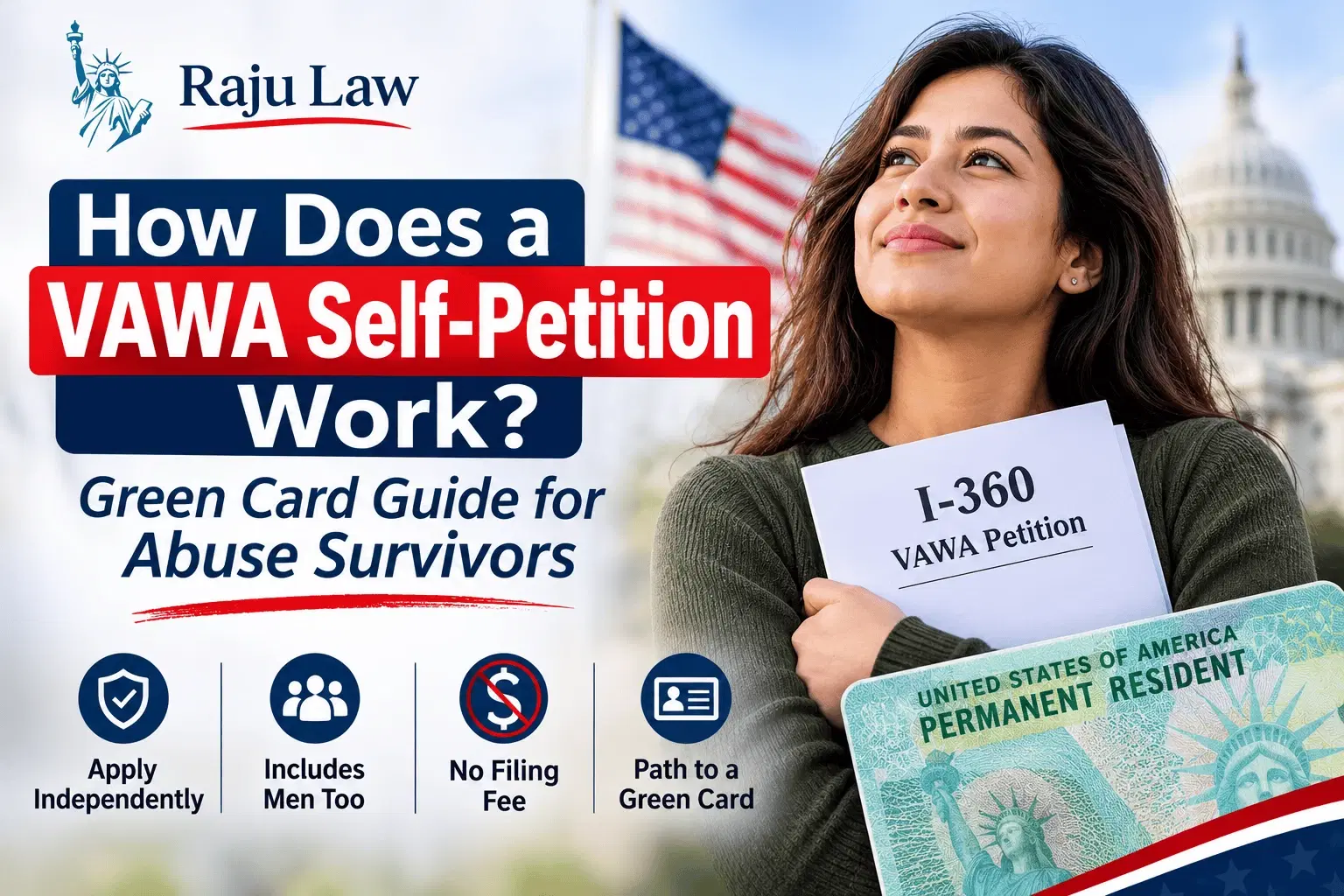
Living with an abusive spouse or parent is hard enough. When that person also controls your immigration status, leaving can feel impossible. A VAWA self-petition changes that. It lets eligible survivors apply for a green card on their own, without the abuser's knowledge, signature or help. This guide explains VAWA eligibility, how Form I-360 works, and what to expect in 2026.
Key Takeaways
A VAWA self-petition lets abused spouses and children of U.S. citizens or green card holders, and abused parents of U.S. citizens who are 21 or older, apply for immigration status on their own, without the abuser's involvement or knowledge.
VAWA protects survivors of every gender, including men.
Form I-360 has no filing fee, and USCIS does not notify the abuser.
USCIS tightened its review of VAWA cases in December 2025 (Policy Alert PA-2025-33), and the stricter rules apply to all petitions pending or filed on or after December 22, 2025, so strong evidence matters more than ever.
What Is a VAWA Self-Petition?
The Violence Against Women Act (VAWA) allows certain abuse survivors to file their own immigration petition instead of relying on the abusive relative to sponsor them. The filing is made on Form I-360, commonly called the I-360 VAWA petition.
Federal law keeps the case confidential. USCIS does not contact the abuser about your petition and cannot deny your case based only on information the abuser provides. That is why many survivors file safely while still living with the abuser. A confidential consultation with an immigration attorney is a good first step.
Who Meets VAWA Eligibility?
You may qualify if you are:
The spouse or former spouse of an abusive U.S. citizen or lawful permanent resident
The spouse of a U.S. citizen or permanent resident who abused your child, even if you were not abused yourself
An "intended spouse" who married a U.S. citizen or permanent resident in good faith, where the marriage is invalid only because the abuser was already married to someone else (bigamy) without your knowledge
The unmarried child under 21 of an abusive U.S. citizen or permanent resident
The parent of an abusive U.S. citizen son or daughter who is 21 or older
You must also show:
A qualifying relationship. Former spouses generally must file within two years of a divorce connected to the abuse, of the abuser's death, or of the abuser losing or giving up U.S. citizenship or permanent resident status because of an incident of domestic violence.
Battery or extreme cruelty. Abuse does not have to be physical. Threats, isolation, financial control and emotional abuse can count.
Shared residence. You lived with the abuser at some point during the marriage or qualifying relationship. There is no minimum length of time, and you do not need to be living with the abuser when you file.
Good moral character.
A good-faith marriage (for spouses). You married for genuine reasons, not only for immigration benefits.
Children of an abused spouse can often be included in the petition, even if they were not abused themselves.
VAWA for Men: Are Male Survivors Protected?
Yes. Despite its name, VAWA is gender-neutral. Men abused by a wife, a husband or an adult U.S. citizen child have the same rights as women, and same-sex marriages qualify too. According to USCIS, male self-petitions rose by about 259% between fiscal years 2020 and 2024. The agency has cited that increase as one reason for stricter review of VAWA cases, so strong, well-documented evidence is especially important. Stigma still keeps many men silent, but the process, the protections and the path to a VAWA green card are the same for everyone.
How Does the VAWA Green Card Process Work?
Gather evidence of the relationship, the abuse, shared residence and good moral character.
File Form I-360. There is no filing fee. If the abuser is a U.S. citizen, you can usually file your green card application (Form I-485) at the same time.
Receive a prima facie determination. If the petition looks complete, USCIS may issue a notice that can help with some state or local benefits. Federal benefit eligibility for VAWA self-petitioners has narrowed sharply since 2025, so check what your state offers.
Get approval. Approved self-petitioners generally receive deferred action and can apply for a work permit.
Apply for your green card. Spouses, children and parents of U.S. citizens can adjust status right away. If the abuser is a permanent resident, you may need to wait for a visa number.
What Evidence Supports an I-360 VAWA Petition?
Since December 2025 (USCIS Policy Alert PA-2025-33), USCIS has reviewed VAWA evidence more closely, and the stricter approach applies to pending cases as well as new filings. Officers now look harder at whether your evidence is credible, whether a marriage was entered in good faith, and whether you meet the good moral character requirement, which gives them more discretion. Stepchildren and stepparents must also show the relationship continued after filing if the biological or legal parent or child has died. Helpful documents include:
Marriage or birth certificates and proof of the abuser's citizenship or green card status
Police reports, protection orders, medical records or shelter records
Texts, emails, photos or social media messages showing abuse
A detailed personal declaration describing the relationship and the abuse
Letters from counselors, social workers, friends or religious leaders
Leases, bills or bank statements showing you lived together
Police clearances and affidavits showing good moral character
Joint accounts, insurance, photos and children's birth certificates showing a genuine marriage
USCIS accepts any credible evidence, so a missing police report does not end your case. If collecting records could put you in danger, put your safety first.
Why Work With a VAWA Attorney?
A VAWA case rests on your own story, told clearly and backed by credible evidence. An attorney can confirm eligibility, help you gather records safely, and prepare a declaration that meets USCIS's current standards. Read our breakdown of the latest USCIS policy updates for VAWA petitioners, or contact Raju Law for a confidential consultation.
Frequently Asked Questions
Will my abuser find out I filed a VAWA self-petition?
One thing to check with the attorney: on the same day as the VAWA alert, USCIS issued a second alert, PA-2025-34. It updates Policy Manual guidance to clarify when USCIS will allow confidentiality protections to apply in certain cases, such as VAWA self-petitions, T, and U visas. I couldn't confirm exactly what it changed. If it narrowed when § 1367 applies, "federal law protects your information" may need a qualifier.
Do I need a police report to qualify?
No. Police reports help, but USCIS considers any credible evidence, including your declaration, medical records and letters from people who know your situation.
Can I file if I am already divorced?
Often, yes. You generally must file within two years of the divorce and show the divorce was connected to the abuse.
How long does a VAWA self-petition take?
Most I-360 VAWA petitions currently take about four years. Approval usually brings deferred action and eligibility for a work permit.
Can I remarry while my petition is pending?
Remarrying before your petition is approved can make you ineligible. Remarriage after approval does not affect it.