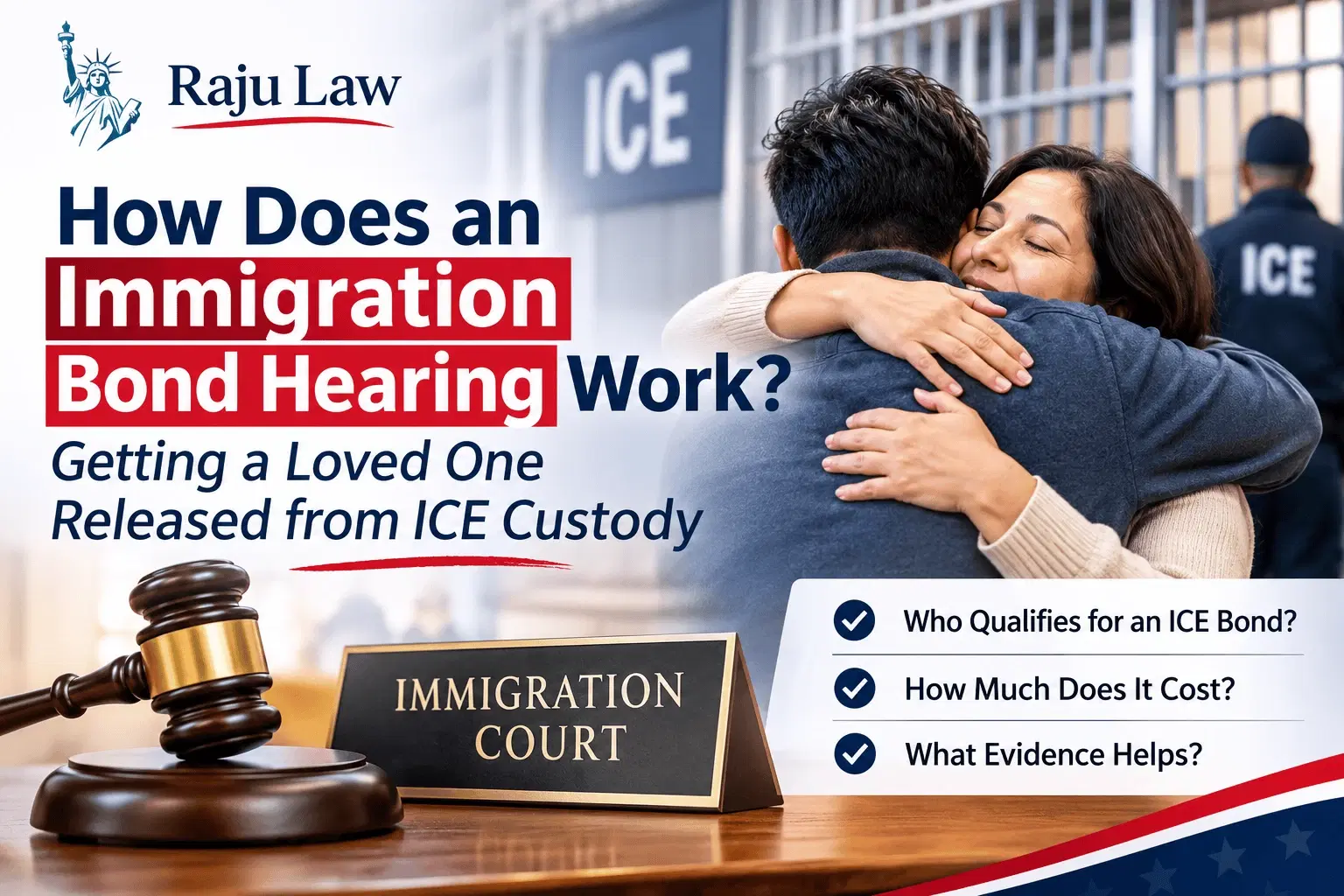
How Does an Immigration Bond Hearing Work? Getting a Loved One Released from ICE Custody
When ICE detains someone you love, every day apart feels like a week. For many families, the fastest way home is an immigration bond hearing: a chance to ask an immigration judge to release your relative while their case moves forward. This guide explains who qualifies, what an ICE bond costs, and how to build the evidence that persuades a judge.
Key Takeaways
An immigration bond hearing lets a judge decide whether a detained loved one can go home while their removal case continues.
The judge focuses on two questions: is the person a danger to the community, and will they show up to court?
The legal minimum immigration bond is $1,500, but most bonds are set much higher. According to TRAC, the median bond set by immigration judges in September 2026 was $7,500. Amounts vary widely by court, from about $3,000 in Bloomington, Minnesota to $20,000 in Denver.
Organized evidence of family ties, steady work and a stable address is what most often wins release.
What Is an Immigration Bond Hearing?
An immigration bond hearing is a short proceeding in immigration court where a detained noncitizen asks to be released while their case continues. Its formal name is a custody redetermination, because the judge reviews ICE's earlier custody decision.
The judge can keep the person detained, grant release on bond, lower or raise a bond ICE already set, or release on other conditions. Bond does not decide whether your loved one can stay in the United States. It only decides where they wait for that answer: at home or in detention. An experienced immigration attorney can explain what to expect before the hearing begins.
Who Is Eligible for an ICE Bond?
Most people arrested inside the U.S. and placed in removal proceedings have traditionally been able to request bond under INA § 236(a). Some groups usually cannot, including:
People subject to mandatory detention because of certain criminal convictions or, since 2025, people who entered without inspection or valid documents and are arrested for, charged with, or admit to certain crimes such as theft or burglary
People with a final order of removal
Arriving noncitizens stopped at a port of entry
Many people placed in expedited removal
Eligibility has also become harder to predict. Since 2025, ICE and the Board of Immigration Appeals (in Matter of Yajure Hurtado, September 2025) have taken the position that people who entered without inspection are not eligible for bond at all. On February 18, 2026, a federal court in California vacated that decision in the Maldonado Bautista class action, but on March 31, 2026, the Ninth Circuit put that order on hold during the appeal. Other appeals courts are split. The Fifth Circuit sided with the BIA in Buenrostro-Mendez v. Bondi. The First Circuit (Guerrero Orellana, August 13, 2026) and the Third Circuit (August 28, 2026) held that people arrested inside the U.S. after entering without inspection can seek bond. On October 1, 2026, the Supreme Court agreed to decide the issue in Rhoney v. Barbosa da Cunha. Until it rules, whether your loved one can get a bond hearing may depend on where they are held, and some people may need to file a habeas corpus petition in federal court.
How Much Is an Immigration Bond?
Federal law sets a minimum bond of $1,500 and no maximum. In practice, amounts have climbed: typical bonds now often fall between $10,000 and $15,000, and judges set higher amounts when they see a flight risk.
The judge weighs factors such as:
Criminal history, if any
Prior immigration violations or missed court dates
Time in the U.S. and family ties here
Steady employment and a fixed address
A realistic path to stay, such as a pending asylum claim or family petition
Unlike criminal bail, an ICE bond must be paid in full. A U.S. citizen or lawful permanent resident usually posts it as the "obligor," either directly with ICE or through a surety bond company that charges a fee. The money is returned when the case ends, as long as the person attends every hearing and follows all conditions. If you are unsure how to post an ICE bond safely, Raju Law's immigration team can walk your family through it.
How Does a Custody Redetermination Work?
ICE makes an initial custody decision. ICE may set a bond amount or deny bond entirely.
You request a hearing. An attorney files a written bond request with the immigration court, or the detained person asks the judge at their first hearing.
The hearing takes place. Bond hearings are usually brief, often held by video, and kept separate from the main removal case. The detained person generally must show they are not a danger and are likely to appear in court.
The judge decides. The ruling usually comes at the end of the hearing. Either side may appeal to the Board of Immigration Appeals, and in some cases the government can keep the person detained while it appeals.
Circumstances change. If something important changes, such as a newly approved petition, you can ask for a new hearing.
What Bond Hearing Evidence Should You Gather?
Strong bond hearing evidence is often the difference between release and continued detention. Start collecting these documents right away:
Identity and immigration records: passport, ID and copies of any prior immigration filings
Family ties: birth and marriage certificates for U.S. citizen or permanent resident relatives
A sponsor letter: from the person your loved one will live with, plus their ID and proof of status
Proof of address: a lease, mortgage statement or utility bill
Work history: pay stubs, tax returns and an employer letter
Community support: letters from religious leaders, neighbors, teachers or volunteer groups
Court records: certified dispositions for any arrest, plus proof of completed classes or probation
Path to relief: receipts or copies of any pending asylum, family or other applications
Include certified translations of any foreign-language documents, organize the packet clearly, and file it before the court's deadline. Raju Law can review your bond packet before it is filed so nothing important is missing.
Why Work With an Immigration Attorney?
Bond hearings move fast, and one missing document or a vague sponsor letter can cost thousands of dollars or weeks of detention. An experienced attorney can confirm eligibility under current law, file the request quickly, prepare witnesses, and argue for the lowest reasonable bond. If you need help bringing a family member home, contact Raju Law to discuss your case.
Frequently Asked Questions
How long does it take to get an immigration bond hearing?
Many hearings are scheduled within days to a few weeks of the request. Timing depends on the detention court's backlog and on whether eligibility is disputed.
Can ICE deny bond completely?
Yes. ICE can refuse to set any bond, and a judge can also deny bond after finding the person is a danger or a flight risk.
Do you get the immigration bond money back?
Yes, if the person attends every hearing and follows all bond conditions. After the case ends, ICE mails the obligor (the person who posted the bond) a bond cancellation notice, Form I-391. The obligor then sends that notice, along with the original bond receipt (Form I-305), to request the refund. Keep both documents in a safe place, and if the obligor moves, update the address with ICE using Form I-333 so the cancellation notice reaches them. Missing even one hearing can mean losing the full bond amount.
Can a bond amount be lowered later?
You can request a new custody redetermination if circumstances have materially changed since the last hearing, such as new evidence of family ties or a newly filed application.
What happens if the judge denies bond?
You can appeal to the Board of Immigration Appeals. In some situations, a habeas corpus petition in federal court may also be an option.
This article is for general information and is not legal advice. Immigration detention law is changing quickly, so speak with a licensed attorney about your specific situation.