
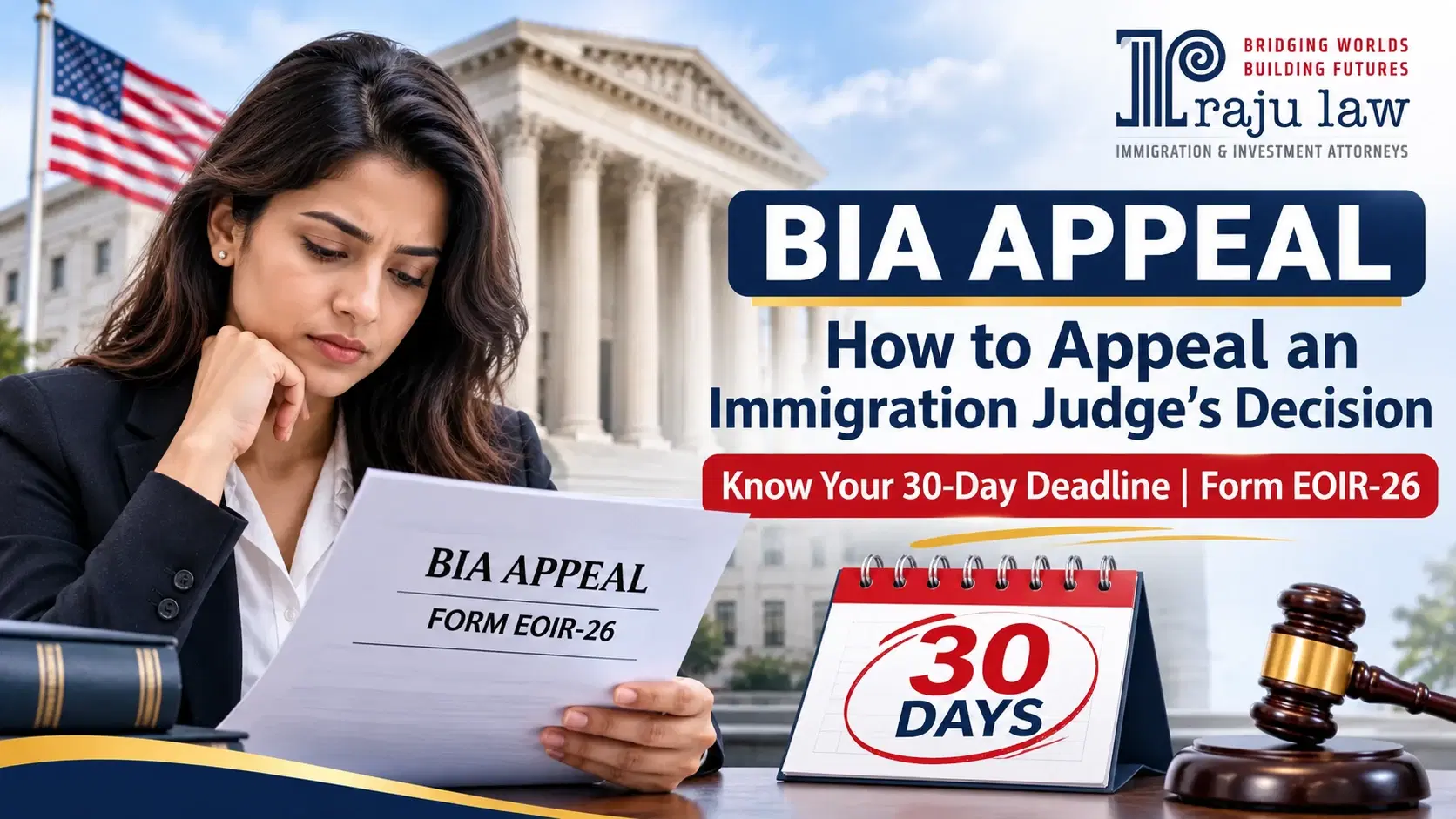
Losing a case in immigration court can feel final, but it usually is not. If an immigration judge denied your application for relief or ordered you removed, you generally have the right to file a BIA appeal with the Board of Immigration Appeals. A timely, well-argued appeal can pause your removal, correct legal errors, and in some cases send your case back for a new hearing.
The process is strict, though. Missing the deadline or filing a vague notice of appeal can end your case before the Board ever looks at the merits. This guide walks you through the BIA appeal deadline, how to file Form EOIR-26, what the briefing process looks like after the 2026 rule changes, and what realistically happens next.
Key Takeaways
You generally have 30 calendar days to file a BIA appeal if the immigration judge decided your case before December 17, 2026. Under a final rule published November 17, 2026, most appeals of decisions issued on or after December 17, 2026 must reach the Board within 10 calendar days. Appeals of asylum claims denied on the merits still have 30 days. In every case, the Board must receive your appeal by the deadline, so contact an attorney as soon as you get the judge's decision.
Appeals are filed on Form EOIR-26. The filing fee is $1,060 for filings on or after October 1, 2026, unless you qualify for a fee waiver.
A timely appeal of a deportation order generally keeps the order from becoming final while the appeal is pending.
Since March 2026, both sides file briefs at the same time, within 20 days of the Board's briefing schedule, and extensions are rarely granted.
If the Board rules against you, you may still have options, including a petition for review in federal court or a motion to reopen or reconsider.
What Is the Board of Immigration Appeals?
The Board of Immigration Appeals (BIA) is the highest administrative body that interprets and applies U.S. immigration law. It is part of the Executive Office for Immigration Review (EOIR) within the Department of Justice and reviews decisions made by immigration judges across the country.
The Board does not hold a new trial. You will not testify again or present new witnesses. Instead, appellate immigration judges review the written record from your hearing, including the transcript, the evidence, and the judge's decision.
How the Board reviews your case matters. It reviews an immigration judge's findings of fact, such as whether your testimony was credible, only for "clear error." That is a demanding standard. It reviews questions of law, discretion, and judgment fresh, without deferring to the judge. This is why appeals built on legal errors often have a better chance than appeals that simply disagree with how the judge viewed the facts.
What Decisions Can You Appeal?
You can appeal most final decisions an immigration judge makes in removal proceedings, including:
Orders of removal (deportation)
Denials of asylum, withholding of removal, or protection under the Convention Against Torture
Denials of cancellation of removal, adjustment of status, or waivers
Bond and custody decisions
Some decisions cannot be appealed to the Board, such as an immigration judge's review of a negative credible fear or reasonable fear finding. Appeals of certain USCIS decisions use a different form, Form EOIR-29, and follow separate rules.
If you are unsure whether your case qualifies, an attorney who handles BIA appeals in immigration court can review the decision and the record before the deadline runs out.
The BIA Appeal Deadline: 30 Days
The BIA appeal deadline is 30 calendar days from the date the immigration judge announces an oral decision, or from the date a written decision is mailed or served electronically. If the 30th day falls on a weekend or federal holiday, the deadline moves to the next business day.
Three points catch people off guard:
Receipt, not mailing, counts. The Board must receive your appeal by the deadline. Mailing it on day 29 is not enough.
The deadline is almost never extended. Late appeals are usually dismissed, and the judge's decision becomes final.
Reserve your appeal. At the end of your hearing, the judge will ask whether you want to reserve or waive appeal. Unless you have a clear reason not to, reserve it. Waiving closes the door.
You may have heard about a February 2026 interim rule that tried to cut the BIA appeal deadline to 10 days. A federal court blocked that rule in March 2026, but on November 17, 2026, the Department of Justice published a final rule that brings the 10-day deadline back. For immigration judge decisions issued on or after December 17, 2026, most appeals must reach the Board within 10 calendar days. Decisions issued before that date keep the 30-day deadline, and so do asylum claims an immigration judge denied on the merits. Asylum claims rejected on threshold grounds, such as the one-year filing bar, are on the 10-day clock, and so are withholding-only and CAT-only cases. If the judge denied your asylum claim along with another form of relief, file within 10 days to protect your right to appeal both.
How to File Form EOIR-26: Step by Step
Form EOIR-26, the Notice of Appeal from a Decision of an Immigration Judge, starts the appeal. Filing it correctly is the most important step in the process.
Get the decision and identify the errors. Obtain the judge's written decision or a summary of the oral decision. List each specific legal or factual error you believe the judge made.
Complete Form EOIR-26 in detail. State the grounds for appeal clearly and specifically. Vague statements such as "the judge was wrong" can lead to summary dismissal. Indicate whether you will file a separate brief, and file one if you say you will.
Pay the fee or request a waiver. The fee is $1,060 for filings made on or after October 1, 2026. EOIR now accepts payment only through its online payment portal. If you cannot afford the fee, file a fee waiver request on Form EOIR-26A. Bond appeals have no fee.
Serve the government. Send a copy of the appeal to the Department of Homeland Security office that handled your case and include a proof of service.
File with the Board. Attorneys and accredited representatives must file electronically through EOIR's case portal. Unrepresented individuals may file on paper with the BIA Clerk's Office. An attorney must also file a Notice of Appearance before the Board on Form EOIR-27.
Keep copies of everything, including the payment receipt and proof of filing.
The Briefing Process After the 2026 Rule Changes
The Briefing Process After the 2026 Rule Changes
For immigration judge decisions issued on or after December 17, 2026, the Board dismisses most appeals without briefing. Your case moves forward only if a majority of the permanent Board members vote to accept it within 10 days of filing. If your appeal is accepted, the Board obtains the record, has a transcript of your hearing prepared, and issues a briefing schedule. These briefing rules took effect in March 2026, and the November 2026 final rule keeps them:
Simultaneous briefing. You and the government file briefs at the same time, whether or not you are detained.
20-day deadline. Briefs are due 20 days after the Board issues the schedule.
No automatic reply brief. The Board does not accept reply briefs unless it invites or orders them.
Limited extensions. Extensions are granted only in exceptional circumstances. A busy schedule or travel does not qualify.
Your brief is where the appeal is won or lost. It should cite the record, explain each error, apply the correct legal standard, and show how the error affected the outcome. Because there is little time and usually no chance to reply, strong preparation must start the day the appeal is filed.
What Happens While Your Appeal Is Pending?
In most cases, the immigration judge's removal order does not become final while a timely appeal is pending, so the government generally cannot carry it out during that time. This protection depends on filing on time.
While you wait:
Keep your address current. File Form EOIR-33/BIA within five days of any move. Missing a notice can cost you your case.
Follow any bond or reporting conditions. Appeals do not excuse check-ins with immigration authorities.
Expect a decision timeline. Under current rules, the Board aims to decide single-member cases within 90 days and three-member panel cases within 180 days after the record is complete.
Possible Outcomes of a BIA Appeal
The Board can:
Dismiss the appeal, leaving the judge's decision in place
Sustain the appeal, reversing the decision in your favor
Remand the case, sending it back to the immigration judge for further proceedings or a new decision
If the Board dismisses your appeal, the removal order generally becomes final. You may still have options:
Petition for review in the federal court of appeals, filed within 30 days of the Board's decision. Filing does not automatically stop removal, so a separate stay request is often needed.
Motion to reconsider, generally due within 30 days, if the Board made a legal or factual error.
Motion to reopen, generally due within 90 days, if new evidence or changed circumstances exist.
Our team handles motions to reopen and reconsider when an appeal does not go your way.
What Are Your Chances of Winning a BIA Appeal?
There is no single success rate that applies to every case. Your chances depend on the type of error, the strength of the record, and how well the appeal is argued.
Appeals tend to be stronger when:
The judge applied the wrong legal standard or misread the law
Key evidence was ignored or not properly weighed
Due process was violated, such as denying a fair chance to present your case
A recent court or Board decision changes the outcome
Appeals tend to be weaker when they only challenge credibility findings or ask the Board to weigh the evidence differently, since those findings are reviewed only for clear error.
Frequently Asked Questions
How long do I have to file a BIA appeal?
You generally have 30 calendar days from the immigration judge's decision. The Board must receive your appeal within that time.
Can I appeal a deportation order without a lawyer?
Yes. You can file Form EOIR-26 yourself. However, the tight deadlines, simultaneous briefing, and strict standards of review make legal representation highly valuable.
Can I present new evidence to the BIA?
Generally, no. The Board reviews the existing record. If you have important new evidence, you may need to file a motion to remand or a motion to reopen instead.
Can I be deported while my appeal is pending?
In most cases, a timely appeal keeps the removal order from becoming final while the Board reviews it. A late appeal does not provide this protection.
How long does a BIA appeal take?
Timelines vary. After the record is complete, the Board aims to decide single-member cases within 90 days and panel cases within 180 days, but transcript preparation and briefing add time.
What if the BIA denies my appeal?
You may be able to file a petition for review in federal court within 30 days, or a motion to reconsider or reopen with the Board.
Talk to an Appeals Attorney
A BIA appeal is often your best chance to fix a wrong decision, but the window is short and the rules are unforgiving. Acting quickly protects your right to appeal and gives your attorney time to build a strong brief. Talk to an appeals attorney at Raju Law to review your immigration judge's decision and plan your next step.