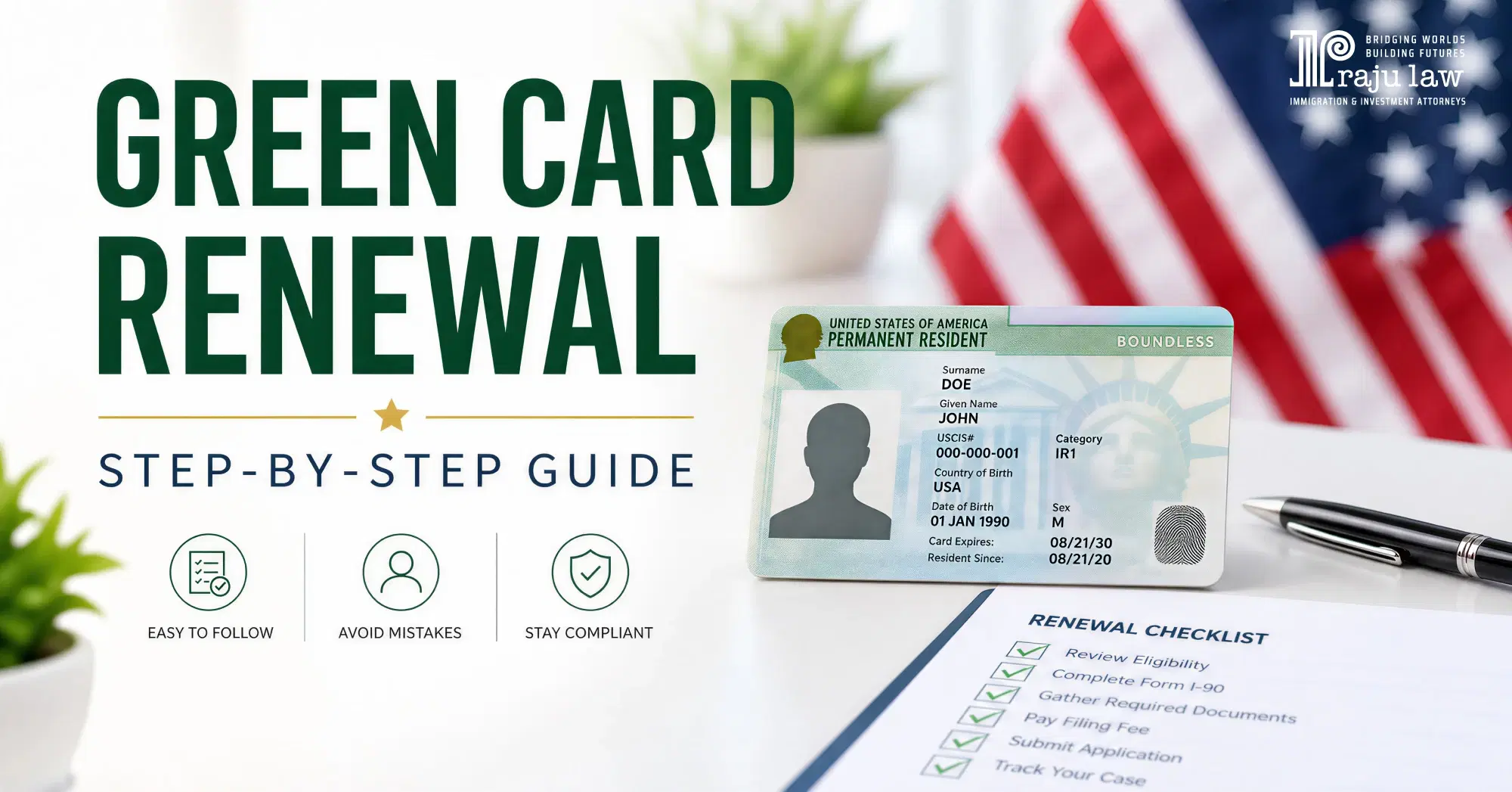
A Green Card, also known as a Permanent Resident Card, allows foreign nationals to live and work in the United States permanently. However, Green Cards have an expiration date, typically valid for 10 years. If you're a permanent resident, it's important to understand the process of renewing your Green Card to maintain your legal status. This guide covers everything you need to know about Green Card renewal, from eligibility to the application process.
When Should You Renew Your Green Card?
You should start the Green Card renewal process within six months of the expiration date. It’s important to apply on time to avoid complications with your immigration status. USCIS recommends applying for renewal at least 6 months before the expiration to ensure you don’t face delays.
Who Needs to Renew a Green Card?
Most permanent residents need to renew their Green Card every 10 years. However, certain individuals might not need to renew:
Conditional residents: If you have a conditional Green Card (valid for 2 years), you must file to remove conditions before your card expires.
U.S. citizens: Once you become a U.S. citizen, you no longer need a Green Card.
How to Renew Your Green Card?
The Green Card renewal process involves several key steps. Here's a step-by-step breakdown:
Step 1 – Complete Form I-90
The first step in the Green Card renewal process is to complete Form I-90, Application to Replace Permanent Resident Card. This form can be filed online or by mail. Make sure you fill out all the required fields accurately to avoid delays.
Step 2 – Pay the Fees
The filing fee for Form I-90 is $540, which includes a $455 processing fee and an $85 biometric services fee. Payment is due when you submit your application. If you are filing online, you can pay via credit card or debit card. If you’re filing by mail, you can send a check or money order.
Step 3 – Submit Supporting Documents
Depending on your situation, you may need to submit supporting documents along with Form I-90. These could include:
A copy of your expired or expiring Green Card
Any legal documents if your name has changed
Proof of U.S. citizenship if applicable
Step 4 – Attend Biometrics Appointment
Once your application is processed, USCIS will send you an appointment notice for biometric services. During this appointment, your fingerprints, photograph, and signature will be taken for identification purposes.
What Happens After You Apply?
After you submit your Green Card renewal application, USCIS will process it. You may receive a receipt notice confirming your application was received. The processing time can vary, but it usually takes about 6-12 months.
Green Card Renewal while Traveling
If you need to travel outside the U.S. while your Green Card is being renewed, you can apply for a temporary travel document (Form I-131) to re-enter the U.S. However, it is recommended that you avoid traveling until you receive your renewed Green Card unless absolutely necessary.
Can You Work While Waiting for Your Green Card?
While your Green Card renewal is being processed, you can continue working in the U.S. if you have a valid job authorization, such as an EAD (Employment Authorization Document).
Common Issues During the Green Card Renewal Process
Sometimes, applicants may face issues when renewing their Green Cards. Here are a few common problems:
Delays in Processing
USCIS processing times can sometimes be longer than expected. If your Green Card is about to expire and you haven't received your renewal yet, make sure to contact USCIS for updates or apply for an extension of stay if necessary.
Lost or Stolen Green Card
If your Green Card is lost or stolen, report it to USCIS immediately. You'll need to file Form I-90 and pay the appropriate fee to request a replacement card.
Name Changes
If you've changed your name since your Green Card was issued, make sure to submit the necessary legal documents to reflect the change when renewing.
How Long Does It Take to Receive Your New Green Card?
After submitting your application for renewal, the processing time can vary. It usually takes around 6 to 12 months to receive your new Green Card. Make sure to keep your receipt notice and other documents with you, as they can serve as proof of your legal status in the meantime.
Green Card Expired: What Happens Next?
If your Green Card expires before you renew it, you should file the renewal application immediately. If you have an expired Green Card, it’s important to know that it doesn’t affect your permanent resident status. However, it may affect your ability to travel, get employment, or obtain government benefits. Having a valid Green Card is also essential for proving your permanent resident status.
Benefits of Renewing Your Green Card
Renewing your Green Card ensures that you maintain your permanent resident status in the U.S. Some of the benefits include:
Proof of status: A valid Green Card is proof that you are a lawful permanent resident.
Ease of travel: A renewed Green Card allows you to travel freely in and out of the U.S.
Work authorization: You can continue to work in the U.S. without issue.
FAQs:
Q1: How early can I apply for Green Card renewal?
You can apply as early as 6 months before your Green Card expires.
Q2: What if I don’t apply for renewal before my Green Card expires?
While your Green Card may expire, your permanent resident status remains intact. However, it is important to renew it as soon as possible to avoid complications with employment or travel.
Q3: Can I renew my Green Card if I am outside the U.S.?
If you're outside the U.S., you may face challenges renewing your Green Card.
Q4: Do I need to renew my Green Card if it is valid for life?
Green Cards that are valid for life are only issued to certain individuals, like U.S. citizens. If you are a conditional resident, you must renew your Green Card before the expiration date.
References: