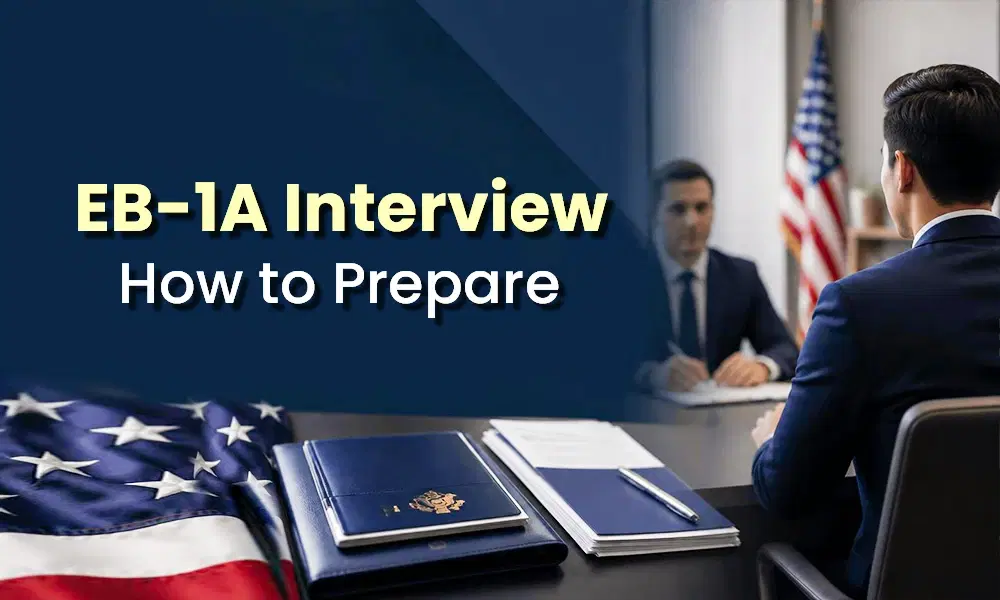
An approved I-140 for extraordinary ability is a milestone, but it is not the finish line. Whether you are adjusting status inside the United States or completing consular processing abroad, an interview may still stand between you and your green card. In 2026, that step carries more weight than it did a few years ago. And because EB-1A is a self-petition with no sponsoring employer and no job offer, the questions you face are different from those a typical EB-2 or EB-3 applicant hears. Preparing for them well is often what separates a clean approval from months of avoidable delay.
1. Why the Interview Matters More in 2026
For years, USCIS routinely waived interviews for employment-based adjustment applicants with strong records. That era has ended. USCIS has reinstated near-universal in-person interviews for Form I-485 applicants and removed employment-based categories, including EB-1A, from the group it generally considers for a waiver. Under 8 C.F.R. Section 245.6, every adjustment applicant is interviewable unless USCIS affirmatively waives the interview, and a waiver is now the case-by-case exception rather than the norm.
The policy shift announced on May 21, 2026 (PM-602-0199) reinforces this by directing officers to apply broader discretion when evaluating adjustment applications. In plain terms, the interview is now a genuine merits checkpoint, not a rubber stamp. Treat it accordingly.
2. Know Which Interview You Are Preparing For
EB-1A beneficiaries reach the green card through one of two tracks, and the interviews are not the same.
Adjustment of Status (inside the U.S.). You file Form I-485 and attend an interview at your local USCIS field office. Your attorney may attend with you.
Consular Processing (abroad). You complete Form DS-260 and, once the National Visa Center marks the case documentarily qualified, you are scheduled for an immigrant visa interview at a U.S. embassy or consulate. You must complete a medical examination with an authorized panel physician beforehand. The interview is one-on-one with a consular officer, and your attorney cannot enter the room, though they can prepare you and handle any follow-up.
Identifying your track early tells you who your audience is and what preparation looks like.
3. What the Officer Is Actually Checking, and Why EB-1A Is Different
This is where most general guides go wrong. They tell applicants to memorize their employer's business and the terms of a job offer. An EB-1A applicant has neither. Under INA Section 203(b)(1)(A), you petitioned on the strength of your own extraordinary ability. So the officer's attention falls elsewhere:
Identity and consistency. Does the person in the chair match the file, and do your answers align with the petition, the forms, and the evidence you submitted?
Your qualifying claims. The criteria you satisfied under 8 C.F.R. Section 204.5(h)(3), such as awards, qualifying memberships, published material, judging, original contributions, or authorship, should be things you can describe in plain language, not just points in a brief.
The prospective element. EB-1A requires evidence that you intend to continue working in your area of extraordinary ability, as set out in 8 C.F.R. Section 204.5(h)(5). No job offer is required, but you must show intent through current employment, contracts, client engagements, or a coherent plan. Expect some version of the question, "What will you be doing in the United States?"
Admissibility. Immigration and travel history, prior filings, and any arrests or violations.
4. Documents to Have Ready
Bring your interview notice, a passport valid for at least six months, and government identification. Beyond that, assemble a copy of your full petition and the I-140 approval notice, and updated evidence of your continuing work, such as recent publications, new citations, signed contracts, engagement or offer letters, media coverage, and any awards received since filing. Adjustment applicants should also carry tax returns, pay records, and proof that lawful status was maintained. Consular applicants should bring the DS-260 confirmation page, the sealed medical results (do not open the envelope), and civil documents with certified translations and police certificates as the consulate instructs.
5. How to Prepare
Reread your own petition. You should know your three or four strongest criteria cold and be able to summarize your contributions in one or two jargon-free sentences.
Rehearse consistency, not a script. Officers are trained to notice answers that drift from the paper record. Keep responses short, honest, and directly responsive to the question asked.
Prepare for the continuing-work question specifically. Have a clear, truthful account of what you do now and what you intend to keep doing in your field. This is the requirement under 8 C.F.R. Section 204.5(h)(5), and it is where self-petitioners are most often caught off guard.
Surface red flags in advance. Layoffs, employer changes, arrests, prior denials, or long absences can invite scrutiny. Raise them with counsel before the interview, not during it.
Remember the consular room is solitary. If you are processing abroad, you will answer alone. Preparation beforehand is everything.
6. Common Pitfalls
The most frequent problems are avoidable. Over-explaining invites new questions, so answer what is asked and stop. Small inconsistencies between the interview, the petition, and the DS-260 or I-485 can turn a routine appointment into a request for more evidence. Perhaps most dangerous is treating the interview as a formality because the petition is already approved. A consular officer can return an approved petition to USCIS with a recommendation to revoke, and a case can be paused under INA Section 221(g) for administrative processing that adds weeks or months. Finally, never let a material change go undisclosed to your counsel before the interview.
Consider a representative example. A data scientist approved on original contributions, published work, and judging arrived expecting only identity questions. Instead, the officer asked what she was currently building and how it advanced her field. Because she had rehearsed a plain-language answer and brought two recent client engagement letters, the continuing-work inquiry under 8 C.F.R. Section 204.5(h)(5) became her strongest moment rather than a stumble.
Note: This article is general information and not legal advice. Interview practices vary by field office and consulate and by individual case facts. Consult a licensed U.S. immigration attorney about your situation.