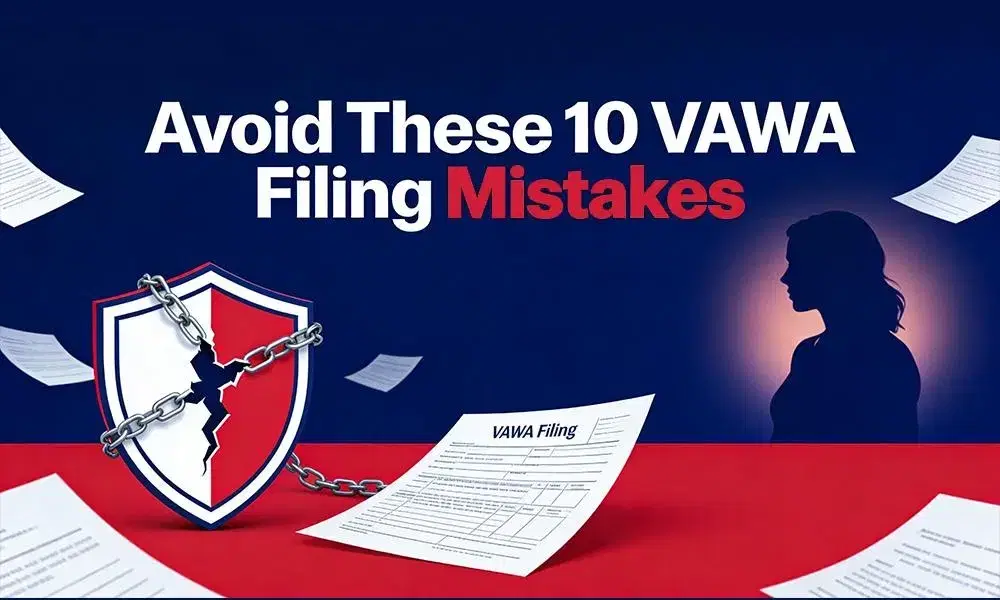
The Violence Against Women Act (VAWA) provides critical protections for survivors of domestic abuse, allowing them to self-petition for legal status without the abuser’s knowledge. While VAWA offers a powerful avenue for safety and independence, the process can be complicated, and even minor mistakes can jeopardize a petition. Law firms frequently encounter cases where procedural missteps or incomplete evidence lead to delays or denials. Understanding the most common pitfalls can help applicants maximize their chances of approval. Based on insights from leading immigration attorneys and recent case analyses, here are the top 10 mistakes in VAWA petitions and how to avoid them.
1. Failing to Establish a Qualifying Relationship
A fundamental requirement of VAWA is demonstrating a qualifying relationship with a U.S. citizen or lawful permanent resident (LPR) spouse, parent, or adult child. Many petitions are denied because applicants fail to provide sufficient proof of this relationship. Common errors include submitting petitions where the marriage was not legally valid, lacking evidence that the marriage was entered in good faith, or filing after the relationship ended without tying it to abuse.
How to Avoid It: Submit official documentation, such as marriage certificates, birth certificates, and evidence of cohabitation. Include affidavits or letters from friends, family, or community members to corroborate the legitimacy of the relationship. Always explain the context if the relationship ended, especially if abuse was involved.
2. Insufficient Documentation of Abuse
VAWA petitions hinge on proving that abuse occurred. Many applicants assume a statement alone is enough. However, USCIS requires credible evidence, including police reports, medical records, counseling notes, or affidavits from witnesses. Psychological or emotional abuse can qualify but must be substantiated with clear documentation. Lack of adequate proof is one of the most common reasons for denial.
How to Avoid It: Gather all available records; medical, law enforcement, and social services. Include personal affidavits detailing the abuse, along with corroborating statements from friends, neighbors, or family who observed or were told about the abuse.
3. Omitting or Misrepresenting Co-Residence with the Abuser
Applicants must show that they lived with the abuser at some point. Some petitions fail because the petitioner cannot prove co-residence through leases, utility bills, or affidavits. Omitting this information can create questions about the validity of the claim.
How to Avoid It: Collect documentation demonstrating shared residence. If direct evidence is unavailable, affidavits from third parties or other indirect evidence – like joint bills or mail addressed to the couple; can support your claim.
4. Filing Incomplete or Incorrect Forms
Even minor mistakes on Form I-360 or supporting documents can delay or jeopardize a case. Common errors include missing signatures, inconsistent dates, incorrect addresses, or failing to respond to USCIS requests for evidence (RFEs).
How to Avoid It: Review all forms thoroughly before submission. Ensure consistency across all documents, especially names, dates, and addresses. If possible, have an immigration attorney review the package to catch errors that might seem minor but carry serious consequences.
5. Ignoring Criminal History or Moral Character Issues
Applicants with criminal convictions or immigration violations must disclose them. Failure to do so can result in denial or even accusations of fraud. Crimes involving moral turpitude, drug trafficking, or violence are particularly scrutinized.
How to Avoid It: Be transparent about any criminal history, including arrests, convictions, or immigration infractions. Provide court records, official documentation, and, if applicable, explanations or evidence of rehabilitation. Consulting an immigration lawyer is highly recommended in cases with complex legal histories.
6. Not Addressing Immigration Violations
Previous deportation orders, overstays, or fraudulent applications can complicate a VAWA petition. Some applicants mistakenly assume that VAWA protections automatically override past immigration issues.
How to Avoid It: Clearly document your immigration history, including visas, entries, and prior applications. Where past violations exist, seek legal counsel to determine if waivers or explanations are needed to maintain eligibility.
7. Weak or Missing Witness Statements
Many petitions are weakened by inadequate corroboration. USCIS values statements from people who can verify the abuse, the relationship, or the petitioner’s good moral character. Applications often fail when affidavits are vague, incomplete, or absent.
How to Avoid It: Collect detailed affidavits from multiple witnesses. Include names, relationships to the petitioner, and specific observations of abuse. Witnesses can be family, friends, neighbors, religious leaders, or counselors who were aware of the abuse.
8. Delays in Filing or Missing Deadlines
Timing is critical in VAWA cases. Some applicants wait too long to file or miss critical deadlines for responding to RFEs. USCIS has specific timeframes for certain types of evidence and responses.
How to Avoid It: Track all deadlines meticulously. File promptly after qualifying abuse or the qualifying relationship period. Respond quickly to any USCIS requests, ideally with attorney assistance to ensure the response is complete and persuasive.
9. Failing to Demonstrate Good Moral Character
VAWA petitions require proof of good moral character for a specified period before filing. Criminal convictions, habitual dishonesty, fraud, or certain behavioral issues can undermine the petition.
How to Avoid It: Provide documentation of employment, community involvement, letters of recommendation, and other evidence that demonstrates positive moral character. Address any past issues transparently, with supporting explanations and proof of rehabilitation where applicable.
10. Attempting to File Without Legal Guidance in Complex Cases
While VAWA allows self-petitioning, navigating the process alone can be risky. Many petitions fail not because of lack of abuse, but due to procedural errors, poor documentation, or failure to address disqualifying factors. Complex cases involving criminal history, immigration violations, or mixed evidence require professional attention.
How to Avoid It: Engage an experienced immigration attorney familiar with VAWA. Attorneys can guide evidence collection, ensure accurate filing, address any potential disqualifications, and provide strategic advice for responding to RFEs. Even minor professional oversight can be the difference between approval and denial.
Conclusion
VAWA petitions provide a vital lifeline for survivors of domestic abuse, but the process is highly procedural and evidence-driven. Common mistakes ranging from failing to prove a qualifying relationship, insufficient documentation of abuse, weak witness statements, or ignoring prior legal issues can significantly delay or derail a petition. Avoiding these mistakes requires careful preparation, thorough documentation, and often, professional legal guidance.
Applicants should prioritize accuracy, completeness, and credible evidence, and seek legal counsel early to navigate the complexities of VAWA self-petitions. By understanding and addressing these top 10 mistakes, survivors can maximize their chances of obtaining protection and begin the journey toward safety, stability, and independence.