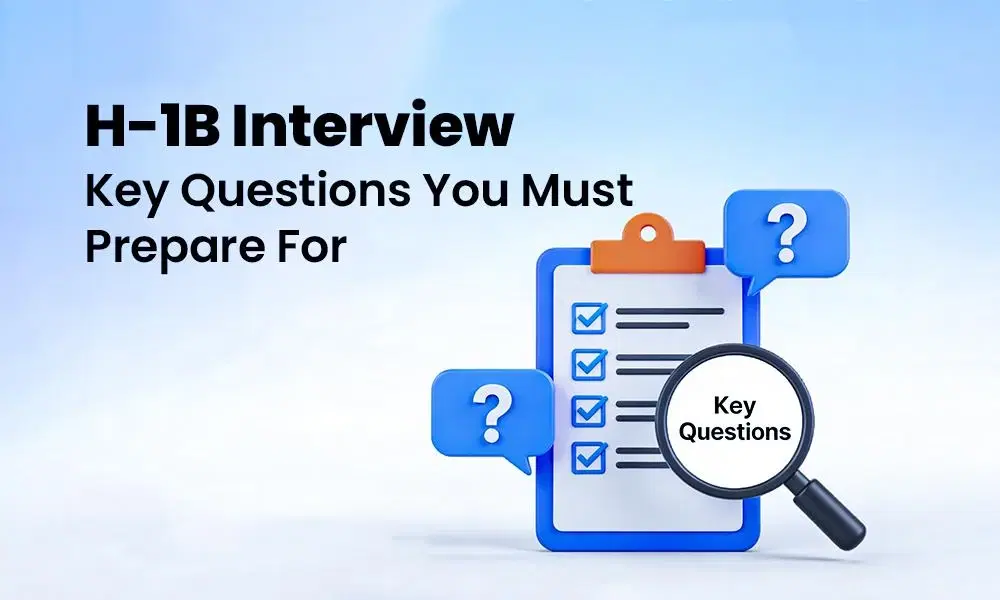
For many H-1B applicants, the visa interview at a U.S. Consulate or Embassy is the final, nerve-wracking hurdle in the immigration journey. After months of waiting for your employer’s petition approval, your entire future in the U.S. often feels like it comes down to a few minutes of conversation with a consular officer.
At Raju Law, we understand that preparation is the antidote to anxiety. While every interview is unique, the goal of the officer remains the same: to verify that your job is legitimate, that you are qualified for it, and that your intent matches your visa category.
This guide will break down the most common H-1B interview questions and provide the strategies you need to walk into your interview with confidence.
The Golden Rule: Consistency is Key
Before diving into specific questions, remember that the foundation of your interview is the DS-160 Form and the H-1B petition (I-129) filed by your employer.
As we emphasized in our guide on the DS-160, consistency is mandatory. The officer will likely have your petition and DS-160 on their screen. If you state a salary or job title that differs from what is in your official documents, it can raise red flags immediately.
Category 1: Questions About Your Intent and General Background
The officer often starts with simple ice-breakers that double as verification of your intent.
“What is the purpose of your trip to the United States?”
Tip: Keep it direct. “To work as a [Job Title] for [Employer Name].”
“Have you ever been to the U.S. before?”
Tip: Be honest. If you have visited for tourism or study, state the dates and purpose clearly.
“Do you have family in the U.S.?”
Tip: Answer truthfully. H-1B is a “dual intent” visa, so having family or immigrant intent is generally not a disqualifier, but hiding it is considered misrepresentation.
“Why did you leave your last position?”
“Do you have any dependents traveling with you to the U.S.?”
Category 2: Questions About Your Job and Company
The officer needs to confirm a legitimate employer-employee relationship exists and that the company is real.
“Who is your employer?”
“What does your company do?”
Tip: Avoid jargon. Explain the company’s business model simply (e.g., “It is an IT consulting firm specializing in healthcare software”).
“What will be your salary?”
Tip: This must match the wage listed on your LCA (Labor Condition Application) exactly.
“Where will you be working?”
Tip: Mention the specific client site or office location listed on your petition. If you work at a client site, be prepared to name the end-client.
“How did you find this job?”
“What will be your job responsibilities?”
Category 3: Questions About Your Education and Experience
The H-1B is for specialty occupations. The officer must verify that you have the specific degree and skills required for the role.
“What is your highest degree?”
“Which university did you graduate from?”
“When did you graduate from university?”
“Do you have any work experience in this field?”
Tip: Briefly summarize your past roles that are relevant to the new position. If your degree is in a different field, explain how your experience equates to the required specialized knowledge.
“Are you currently employed?”
“Why did you leave your last position?”
Essential Documents to Bring
When you attend your interview, having your paperwork organized shows professionalism. Ensure you have:
Passport (valid for at least 6 months beyond your stay).
DS-160 Confirmation Page.
I-797 Approval Notice (original).
Employment Verification Letter from your employer.
LCA Copy and I-129 Petition Copy.
Educational Documents (original diplomas and transcripts).
Pay Stubs/Tax Returns (if currently working in the U.S. or extending status).
Client Letter (if working at a third-party client site).
Common Pitfalls to Avoid
Over-talking: Answer only what is asked. Nervous applicants often ramble, which can lead to accidental contradictions.
Guessing: If you don’t know an answer (e.g., the exact number of employees at your company), say “I don’t know the exact figure, but…” rather than guessing.
Inconsistency: Ensure your verbal answers align perfectly with your resume and petition.
Conclusion
The H-1B interview is the bridge between your petition approval and your new life in the United States. While it can be intimidating, a clear understanding of your job duties, your company, and your own qualifications is your best defense.
At Raju Law, we don’t just file paperwork; we prepare our clients for the entire journey. If you need assistance preparing for visa application or navigating complex RFE issues before you even get to the consulate, we are here to help.
Disclaimer: This blog is for informational purposes only and does not constitute legal advice. Interview questions vary by case and consulate.