
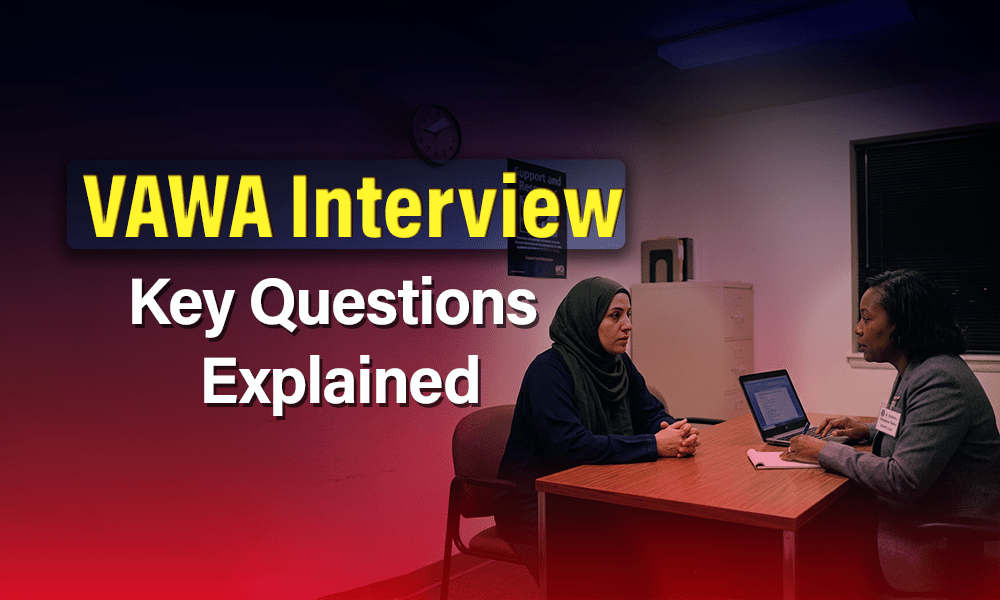
If you have applied for immigration relief under VAWA, you may feel nervous about the possibility of an interview. That’s completely normal. The good news is that not every VAWA applicant is required to attend an interview, and even if you are scheduled for one, it is usually just a routine step to review your case.
Understanding what to expect can help you feel more confident and prepared.
Will You Have a VAWA Interview?
Not all VAWA applicants are called for an interview. Many cases are approved based only on the documents submitted.
You are more likely to have an interview if:
- USCIS needs more information about your case
- There are missing details or inconsistencies
- You applied for a green card (Form I-485)
An interview does not mean something is wrong. It simply means USCIS wants to confirm certain details before making a final decision.
When Does the Interview Happen?
If an interview is scheduled, it usually takes place after your biometrics appointment and before your case is decided.
In many situations, the interview is connected to your green card application rather than your VAWA petition itself. Some applicants never have an interview at all.
What Happens During the Interview?
The interview usually takes place at a USCIS office in a private room with an officer. The purpose is simple:
- To confirm who you are
- To review your application
- To make sure your information is accurate and consistent
The officer will ask questions and compare your answers with the documents you already submitted.
You are allowed to bring:
- Your lawyer (if you have one)
- Copies of your documents
- Any new or updated evidence
Having a lawyer with you can help you feel more comfortable, especially if your case is sensitive.
Common Questions You May Be Asked
Every case is different, but most interviews include similar types of questions.
Basic Questions About You
The officer may start with simple questions like:
- Your name, date of birth, and address
- Your immigration history
- Information from your application
These questions are just to confirm your identity.
Questions About Your Relationship
You may be asked about your relationship with the person who abused you, such as:
- How you met
- When your relationship started
- Whether you lived together
These questions help show that your relationship was real.
Questions About the Abuse
This part can be difficult, but the officer may ask about what you experienced. For example:
- What happened
- When it happened
- How often it happened
You only need to tell the truth and explain your experience as clearly as you can.
Questions About Your Documents
The officer may ask about the evidence you submitted, such as:
- Police reports
- Medical records
- Letters from friends or family
If something is unclear or missing, they may ask you to explain.
Questions About Your Background
You may also be asked about:
- Any criminal history
- Your past immigration status
- Where you have lived or worked
These questions help USCIS understand your overall background.
How to Prepare for Your Interview
Good preparation can make a big difference. Here are some simple tips:
- Review your application and personal statement carefully
- Make sure your answers are consistent with your documents
- Bring any new or updated evidence
- Practice explaining your story clearly
Most importantly, stay calm and be honest.
Important Tips to Keep in Mind
- Always tell the truth, even if you are unsure about small details
- Do not guess if you don’t remember something, it’s okay to say so
- Keep your answers clear and simple
- Stay consistent with what you already submitted
USCIS is not expecting perfection, they are looking for honesty and credibility.
Conclusion
A VAWA interview in 2026 is simply a step to help USCIS better understand your case. It is not meant to intimidate you.
The most important things to remember are:
be honest, stay consistent, and prepare in advance.
With the right preparation and support, you can approach your interview with confidence and move one step closer to securing your immigration status.
